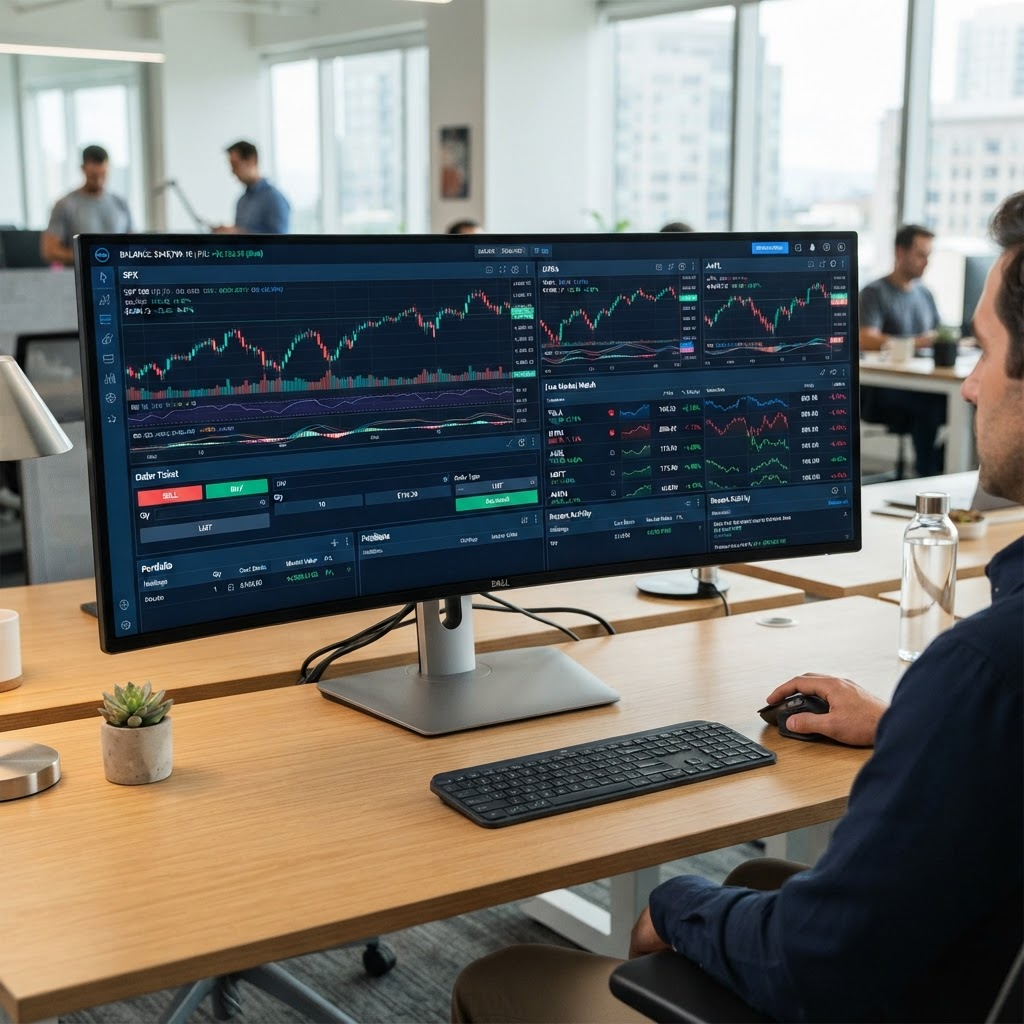
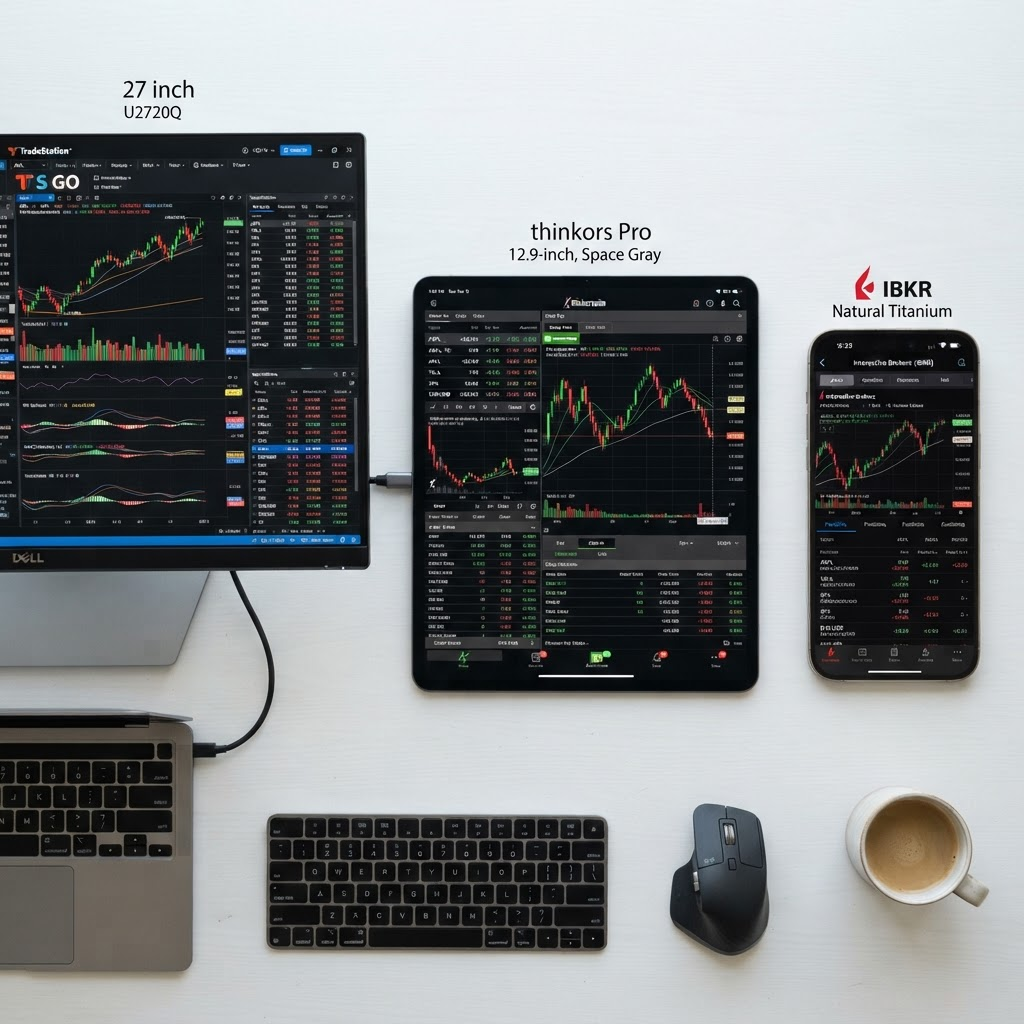
Online trading platforms let traders open, close and manage market positions through a broker. Learn what a trading platform is, how to choose the best one in the UK and which platforms suit beginners in 2026.
Online trading platforms are used by traders to open, close and manage market positions through a financial intermediary such as an online broker. There are many of the best online trading platforms UK to choose from on the internet. Knowing which online trading platform is good for what will help you manage your portfolio successfully. The purpose of this article is to explain what an online trading platform is, how to choose the best trading platform in the UK, and how to select the best stock trading platforms for beginners UK in 2026.
What Is an Online Trading Platform?
Definition
Online Trading Platform
An online trading platform, also known as an electronic trading platform, is software used to execute transactions on the financial markets. It allows online traders to place orders for stocks, shares, bonds, commodities, options, forex and other investments through a financial intermediary such as a stockbroker, bank or exchange.
Various financial institutions such as exchanges and banks offer electronic trading platforms. This way of trading online has become widely used and has overtaken traditional trading systems in the United Kingdom.
Online trading platforms connect buyers and sellers electronically in real time.
What Are Online Trading Platforms Used For?
Online trading platforms are used to connect sellers and buyers. Trading platforms have made telephone trading and traditional stock market floor trading in the United Kingdom outdated. An online trading platform enables stock traders and investors to execute transactions from anywhere in the world. If you have an internet connection, you can access the best online trading platforms anytime. Stock trading software also allows nearly immediate completion of orders, one of the biggest advantages of trading online.
A platform also gives traders access to specific markets that were previously available only through a limited number of trading companies on the London Stock Exchange (LSE). Top platforms in the UK offer charting and analysis tools, plus live streaming of market prices so traders stay up to date with real-time data.
How to Choose an Online Trading Platform
Choosing an online trading platform in the UK is not as easy as it sounds. You need to decide on your trading needs before you evaluate which platform is most suitable. Consider the following points when comparing platforms.
Accessibility: can you trade anytime from any device?
Value for money: what are the transaction and banking fees?
Information access: fundamental and technical market data
Trading tools: stop-loss orders, alerts and charting
Connectivity: access to global stock markets
Real-time market news and updates
Which Online Trading Platform Is Good for What?
Each platform comes with its own features, so the best choice depends on your financial goals.
Definition
MetaTrader 4 & MetaTrader 5
MT4 and MT5 are ideal for professional traders. They give full control over your trading experience, support any strategy, offer thorough market analysis and include beneficial risk management tools.
Definition
WebTrader
WebTrader is one of the best online trading platforms for beginners UK. It is good for those who want to focus on the fundamentals and learn the basics of online trading.
Definition
ZuluTrade & DupliTrade
These social and copy trading platforms let you mirror successful traders in real time, copying their positions directly into your own trading account.
Trading Platform vs Broker: What's the Difference?
Beginners often use the terms "broker" and "trading platform" interchangeably, but they are not the same thing. Understanding the distinction will help you make better choices and avoid confusion as you start trading in the United Kingdom.
Definition
Broker
A broker is the regulated financial company that provides you with access to the markets, holds your money and executes your trades. In the UK, brokers must be authorised and regulated by the Financial Conduct Authority (FCA).
Definition
Trading Platform
A trading platform is the software you actually use to analyse the markets and place your buy and sell orders. Brokers offer platforms to their clients, and a single broker may support several different platforms.
In practice, you choose an FCA regulated broker first, and then select which of the platforms it offers best suits your needs. For example, a broker might offer MetaTrader 4, MetaTrader 5 and its own web-based platform, letting you pick the one you find most comfortable. The quality of both the broker and the platform matters, so consider them together when making your decision.
Types of Online Trading Platforms
Online trading platforms come in several forms, each with its own advantages. Knowing the differences will help you pick the format that fits your lifestyle and trading style.
Web-Based Platforms
Web-based or browser platforms run directly in your internet browser with no download required. They are convenient, work on almost any device and are perfect for beginners who want to start quickly without installing software. The trade-off is that they sometimes offer fewer advanced features than downloadable platforms.
Downloadable Desktop Platforms
Downloadable platforms such as MetaTrader 4 and MetaTrader 5 are installed on your computer and generally offer the most powerful features, including advanced charting, custom indicators and automated trading. They are favoured by serious and professional traders who want maximum control and analysis capabilities.
Mobile Trading Apps
Mobile apps let you trade from your smartphone or tablet wherever you are. They are ideal for monitoring positions, reacting to news and placing quick trades on the move. Most brokers offer a mobile app alongside their web and desktop platforms, and the best ones mirror nearly all the desktop functionality.
The Most Popular Trading Platforms in the UK
A handful of platforms dominate the UK online trading landscape. Getting to know them will help you understand what your broker is offering and which is right for you.
MetaTrader 4 (MT4)
MetaTrader 4 is the most widely used forex trading platform in the world. It is prized for its stability, comprehensive charting tools, huge library of custom indicators and support for automated trading through Expert Advisors. Despite its age, MT4 remains a firm favourite among UK traders of all experience levels.
MetaTrader 5 (MT5)
MetaTrader 5 builds on MT4 with more timeframes, more order types, an integrated economic calendar and access to a wider range of markets including shares and futures. It is a superb all-round platform for traders who want more power and flexibility than MT4 provides.
Proprietary Web Platforms
Many brokers, such as Plus500, have developed their own proprietary web platforms. These are often cleaner and more beginner-friendly than MetaTrader, with intuitive layouts and built-in risk management. They can be an excellent starting point for those new to online trading.
Social and Copy Trading Platforms
Platforms like ZuluTrade and DupliTrade specialise in social and copy trading, letting you automatically mirror the trades of experienced investors. These are popular with beginners who want to learn from others or take a more hands-off approach while they build their knowledge.
Understanding Trading Platform Fees and Costs
While many trading platforms are offered free of charge by brokers, trading online is never entirely without cost. Understanding the various fees involved will help you compare platforms accurately and keep more of your profits.
Definition
Spread
The spread is the difference between the buy and sell price of an asset and is the main cost of trading on most platforms. Tighter spreads mean lower costs, which is especially important for frequent traders.
Definition
Commission
Some platforms charge a fixed commission per trade instead of, or in addition to, the spread. This is common on ECN and share-dealing accounts, where spreads are very tight.
Spreads built into the buy and sell prices
Commissions charged per trade or per lot
Overnight or swap fees for holding positions
Deposit and withdrawal charges
Currency conversion fees on non-GBP trades
Inactivity fees if you stop trading for a while
Optional fees for premium data or tools
Always read a platform's fee schedule carefully before you commit. The cheapest headline spread does not always mean the lowest overall cost, so factor in all the charges that apply to your trading style. Our detailed platform reviews break down the costs of each option.
Essential Features of a Good Trading Platform
Not all trading platforms are created equal. The best platforms combine power, reliability and ease of use. When comparing your options, look out for the following essential features that separate a great platform from a mediocre one.
Fast, reliable order execution with minimal slippage
Advanced charting with a wide range of technical indicators
Real-time price data and integrated market news
Risk management tools such as stop-loss and take-profit orders
A clean, intuitive interface that is easy to navigate
A free demo account to practise on
Secure login with two-factor authentication
Cross-device syncing between desktop, web and mobile
Beginners should prioritise ease of use and a good demo account, while more experienced traders may focus on advanced charting and automation. Whatever your level, never compromise on reliability and security, because a platform that crashes or freezes at a crucial moment can cost you money.
Why You Should Test Platforms on a Demo Account
One of the smartest things you can do before committing to a trading platform is to test it on a demo account. Almost every reputable UK broker offers a free demo funded with virtual money, giving you a completely risk-free way to evaluate the software.
A demo account lets you experience the platform's interface, speed and features first-hand. You can see how easy it is to place orders, whether the charting tools meet your needs, and how responsive the platform feels during live market conditions. This hands-on experience is far more valuable than any review, because it tells you whether the platform genuinely suits the way you like to trade.
We recommend trying two or three different platforms on demo before choosing. Spend at least a couple of weeks with each, placing plenty of practice trades. Only once you have found a platform you are comfortable with should you open a live account and start trading with real money, beginning with a small deposit.
Security and Safety on Trading Platforms
When you trade online, you are trusting a platform with both your money and your personal data, so security is paramount. FCA regulated brokers are required to meet strict standards, but there are also steps you can take to keep your own account safe.
Look for platforms that use bank-grade encryption to protect your data, offer two-factor authentication for logins, and are provided by brokers that hold client money in segregated accounts. On your side, always use a strong and unique password, enable two-factor authentication, keep your software up to date and never share your login details with anyone. Be especially wary of phishing emails pretending to be from your broker, as these are a common way for fraudsters to steal account credentials.
Common Mistakes When Choosing a Platform
Beginners often make avoidable mistakes when selecting their first trading platform. Being aware of these pitfalls will help you make a smarter choice and get off to a better start.
Choosing a platform from an unregulated or offshore broker
Focusing only on low fees while ignoring reliability
Picking an overly complex platform as a complete beginner
Skipping the demo account and trading live too soon
Ignoring the quality of the mobile app
Overlooking hidden fees like inactivity or withdrawal charges
Failing to check available markets and instruments
The most important rule is to always start with an FCA regulated broker, then choose a platform that matches your experience level. There is no shame in starting simple; you can always move to a more advanced platform as your skills grow.
Order Types You Can Use on Trading Platforms
A key advantage of modern trading platforms is the variety of order types they support. Understanding these orders is essential for managing your trades effectively and protecting your capital. Here are the most important order types every UK trader should know.
Definition
Market Order
A market order buys or sells an asset immediately at the best available current price. It guarantees execution but not the exact price, making it suitable for liquid markets where you want to trade right away.
Definition
Limit Order
A limit order lets you set the specific price at which you want to buy or sell. The order only executes if the market reaches your chosen price, giving you control over your entry and exit points.
Definition
Stop-Loss Order
A stop-loss order automatically closes your position if the price moves against you to a level you set in advance. It is one of the most important risk management tools and helps prevent small losses from becoming large ones.
Definition
Take-Profit Order
A take-profit order automatically closes your position once it reaches a set level of profit, locking in your gains without you needing to watch the market constantly.
The best trading platforms make it easy to attach stop-loss and take-profit levels when you open a trade. Using these orders consistently is a hallmark of disciplined trading and can protect you from emotional decision-making during volatile market conditions.
Charting and Analysis Tools Explained
For many traders, the quality of a platform's charting and analysis tools is the single most important factor. Charts are how traders visualise price movements and spot potential opportunities, so powerful, flexible charting can make a real difference.
Look for platforms that offer multiple chart types, such as candlestick, bar and line charts, along with a wide range of timeframes from one minute to monthly. A good platform will include dozens of built-in technical indicators, such as moving averages, the Relative Strength Index (RSI), MACD and Bollinger Bands, plus drawing tools for trend lines and support and resistance levels.
Definition
Technical Analysis
Technical analysis is the study of historical price charts and patterns to forecast future price movements. It relies on indicators and chart patterns rather than a company's underlying financials.
Definition
Fundamental Analysis
Fundamental analysis evaluates an asset's underlying value using economic data, company earnings and news. Many traders combine fundamental and technical analysis for a more complete picture.
MetaTrader 4 and 5 are particularly well regarded for their advanced charting, while beginner-friendly web platforms offer simpler but still capable charts. Whichever you choose, spend time learning how to use the analysis tools properly, as they are only valuable if you understand what they are telling you.
Automated and Algorithmic Trading
One of the more advanced capabilities offered by certain trading platforms is automated trading. This allows you to set predefined rules that the platform executes automatically, without you needing to place each trade manually.
Definition
Expert Advisor (EA)
An Expert Advisor is an automated trading program that runs on the MetaTrader platform. It follows a set of coded rules to open, manage and close trades automatically, based on your chosen strategy.
Automated trading can remove emotion from your decisions, execute trades faster than any human and operate around the clock. However, it is not a guaranteed path to profit. An automated system is only as good as the strategy behind it, and poorly designed systems can lose money quickly. Beginners should approach automated trading with caution, test any system thoroughly on a demo account first, and never assume that automation removes the risks of trading. For most new traders, learning to trade manually is a more valuable first step.
Choosing the Best Platform as a Beginner
If you are new to online trading, the sheer number of platforms and features can feel overwhelming. The good news is that beginners do not need the most advanced platform; they need one that is safe, simple and supportive of learning.
Start by choosing an FCA regulated broker, then look for a platform with a clean, intuitive interface and a free demo account. Beginner-friendly web platforms are often the best starting point, as they hide unnecessary complexity while still offering the essential tools. Good educational resources, responsive customer support and a well-designed mobile app are also valuable for those just starting out.
As your confidence and skills grow, you can explore more powerful platforms like MetaTrader 4 or 5 to access advanced charting and automation. There is no need to rush; mastering a simple platform first will give you a solid foundation. Our beginner's guide to online trading covers the wider fundamentals every new trader should understand.
The Future of Online Trading Platforms
Online trading platforms continue to evolve rapidly, driven by advances in technology and changing trader expectations. Understanding where the industry is heading can help you choose a platform that will serve you well for years to come.
Recent years have seen a strong shift towards mobile-first trading, with many UK traders now managing their entire portfolio from a smartphone. Platforms are increasingly incorporating artificial intelligence and machine learning to offer smarter analysis, personalised insights and improved fraud detection. Social and copy trading features are becoming more sophisticated, and commission-free share dealing has put pressure on costs across the board.
At the same time, regulation continues to strengthen consumer protections for UK traders. Whatever new features emerge, the fundamentals of choosing a platform remain the same: prioritise FCA regulation, reliability, fair costs and ease of use. A platform that gets these basics right will always be a sound choice, no matter how the technology develops.
Markets You Can Trade on Online Platforms
One of the great advantages of modern trading platforms is the sheer range of markets they give you access to. From a single account, UK traders can typically trade thousands of instruments across several asset classes. Understanding these markets will help you decide which platform offers the range you need.
Shares and Stocks
Most platforms let you trade shares in companies listed on the London Stock Exchange and major international exchanges. You can invest in individual companies or trade share CFDs to speculate on price movements in both directions.
Forex
The foreign exchange market is the largest and most liquid in the world, and nearly every trading platform offers a wide range of currency pairs. Forex is popular for its long trading hours and the ability to profit in both rising and falling markets.
Indices
Indices such as the FTSE 100, S&P 500 and Dow Jones let you trade the performance of an entire market or sector at once, rather than picking individual shares. They are popular with traders who want broad market exposure.
Commodities
Many platforms offer commodities such as gold, silver, oil and natural gas. These markets can be a useful way to diversify and are often influenced by different factors than shares and currencies.
Cryptocurrencies
A growing number of platforms now offer cryptocurrency trading via CFDs, letting you speculate on the price of Bitcoin, Ethereum and other digital assets. Crypto is highly volatile, so it carries significant risk and is best approached with caution.
Customer Support and Education
The quality of customer support and educational resources can make a big difference to your experience on a trading platform, especially when you are starting out. When something goes wrong with a trade or a deposit, responsive and knowledgeable support is invaluable.
Look for brokers offering support through multiple channels, including live chat, email and telephone, ideally available during UK market hours. Beyond support, the best platforms provide a wealth of free education, including video tutorials, webinars, trading guides, glossaries and market analysis. For beginners, these resources can dramatically accelerate the learning process and help you avoid common mistakes.
Before committing to a platform, it is worth testing the responsiveness of the customer support team with a few questions and exploring the educational material on offer. A broker that invests heavily in helping its clients learn and succeed is usually a good sign of a trustworthy, customer-focused business.
Trading Platform Checklist
Before you settle on an online trading platform, run through this final checklist to make sure it ticks all the important boxes. Taking the time to compare your options carefully now will save you frustration and money later.
Provided by an FCA regulated broker you can verify
Clean, intuitive interface suited to your experience level
Free demo account to practise on before going live
Competitive, transparent spreads and fees
Fast, reliable order execution
Advanced charting and analysis tools
Full range of order types including stop-loss
A high-quality mobile app for trading on the go
Strong security with two-factor authentication
Good customer support and educational resources
If a platform meets most or all of these criteria, it is likely a solid choice. Use our comparison of recommended brokers above as a shortlist of trusted, FCA regulated options for UK traders in 2026.
Desktop vs Web vs Mobile: Which Should You Use?
Modern brokers usually offer the same account across desktop software, a web platform and a mobile app, and many traders use a combination of all three. Understanding the strengths of each will help you build a setup that fits the way you like to trade.
Desktop platforms, such as the downloadable versions of MetaTrader, tend to offer the most power and the largest screen real estate, making them ideal for detailed analysis and managing multiple positions at once. They are the natural choice for serious traders who spend long hours at their desk and rely on advanced charting and automation.
Web platforms strike a balance between convenience and capability. Because they run in your browser, you can access your account from any computer without installing anything, which is handy if you trade from different locations. Mobile apps, meanwhile, are perfect for keeping an eye on your positions, reacting to breaking news and placing quick trades when you are away from your computer. Most traders find that using the web or desktop platform for analysis and the mobile app for monitoring gives them the best of all worlds.
Key Trading Platform Terms Explained
As you explore different trading platforms, you will come across a range of technical terms. Understanding this vocabulary will help you compare platforms and use them more effectively from day one.
Definition
Execution
Execution refers to the completion of a buy or sell order on the platform. Fast, reliable execution reduces slippage and is especially important for short-term traders.
Definition
Watchlist
A watchlist is a customisable list of the instruments you want to monitor, letting you track prices for your favourite markets at a glance without searching each time.
Definition
Order Book
The order book shows the current buy and sell orders for an instrument at different price levels, giving traders insight into market depth and liquidity.
Definition
Ticker
A ticker is the short, unique symbol used to identify a tradable instrument, such as a stock or currency pair, so you can quickly find and trade it on the platform.
Getting comfortable with this terminology early will make the whole experience of learning a new platform far less intimidating. Most platforms also include built-in help sections and glossaries to explain any features you are unsure about.
Getting Started With Your Chosen Platform
Once you have chosen a platform from an FCA regulated broker, getting started is straightforward. Following a sensible sequence of steps will help you build good habits from the very beginning and avoid costly early mistakes.
1. Open and Verify Your Account
Register with your chosen broker, providing your personal details and the required identity and address documents. Choose a GBP account to avoid currency conversion fees, and complete the suitability questionnaire honestly.
2. Explore the Demo Account
Before risking any real money, spend time on the platform's free demo account. Practise placing orders, setting stop-losses, reading charts and navigating the interface until it feels second nature.
3. Start Small on a Live Account
When you feel ready, fund your live account with a modest amount you can afford to lose. Trading with real money introduces emotions that a demo cannot replicate, so starting small keeps the stakes manageable while you adjust.
4. Keep Learning and Reviewing
Continue to develop your skills using the platform's educational resources, and keep a trading journal to review your decisions. Over time, this disciplined approach will help you become a more confident and consistent trader.
Why Platform Reliability and Speed Matter
When you are comparing the flashy features of different trading platforms, it is easy to overlook one of the most important qualities of all: reliability. A platform that is packed with tools but crashes during volatile markets or suffers frequent outages can cost you far more than one with a simpler but rock-solid performance.
Reliability matters most at exactly the moments when markets move fast and you need to act. If a platform freezes when you are trying to close a losing position or lock in a profit, the financial consequences can be serious. This is why established, well-funded brokers that invest heavily in their infrastructure tend to be a safer bet than unknown operators promising the world. Read reviews, check the broker's track record and test the platform on a demo during busy market hours to get a sense of its stability.
Speed is closely related to reliability. Fast order execution reduces slippage, the difference between the price you expect and the price you actually get, which is particularly important for short-term traders and scalpers. A good platform executes orders in milliseconds and provides real-time price updates without lag. Together, reliability and speed form the foundation of a trustworthy platform, and no amount of advanced features can compensate for a platform that is slow or unstable when it counts.
Online Trading Platforms FAQs
What is an online trading platform?
An online trading platform is software used to execute transactions on the financial markets. It lets traders place orders for stocks, shares, bonds, commodities, options, forex and other investments through a financial intermediary such as a broker, bank or exchange.
Which online trading platform is best for beginners?
Beginner-friendly platforms such as WebTrader and the Plus500 app are good for learning the basics, while MetaTrader 4 and MetaTrader 5 suit more advanced traders who want full control and analysis tools.
Are online trading platforms free?
Many online trading platforms are offered free of charge by brokers, though some may charge a small maintenance fee or earn from spreads and commissions on your trades.
Can I use an online trading platform on my mobile?
Yes. Most modern platforms offer mobile apps or web-based trading so you can open, close and manage positions from your smartphone or tablet anywhere in the UK.
What is the difference between a broker and a trading platform?
A broker is the regulated company that gives you access to the markets and holds your money, while the trading platform is the software you use to place trades. A single broker may offer several platforms, such as MetaTrader 4, MetaTrader 5 and its own web platform, so you can choose the one that suits you.
Do I need to download software to trade online?
Not necessarily. Many brokers offer web-based (browser) platforms that require no download, alongside downloadable desktop software and mobile apps. Web platforms are convenient and work on any device, while downloadable platforms like MetaTrader often offer more advanced features.
Are UK online trading platforms regulated?
The platform itself is software, but the broker providing it to UK clients must be authorised and regulated by the Financial Conduct Authority (FCA). Always confirm your broker is FCA regulated before depositing, as this ensures client money protection and fair trading conditions.
What features should a good trading platform have?
A good platform should offer fast and reliable order execution, advanced charting and technical indicators, real-time price data and news, risk management tools such as stop-loss and take-profit orders, a clean and intuitive interface, and secure login. Beginners should also value a free demo account.
Can beginners use MetaTrader 4 and MetaTrader 5?
Yes, beginners can use MT4 and MT5, though there is a learning curve. Both platforms offer free demo accounts, which are the best way to get comfortable with the interface before trading with real money. Many beginners start on a simpler web platform and move to MetaTrader as they gain experience.
Conclusion: Finding Your Ideal Trading Platform
Your trading platform is the tool you will use every single day as a trader, so it is worth choosing carefully. The ideal platform combines the safety of an FCA regulated broker with a reliable, feature-rich interface that matches your experience level and trading goals. Whether you opt for a beginner-friendly web platform or a powerful MetaTrader setup, the fundamentals remain the same.
Take advantage of free demo accounts to test your shortlist, compare the total costs rather than just headline spreads, and never compromise on regulation or security. With the right platform in place, you will be well equipped to trade with confidence. Explore our detailed platform reviews and the complete online trading UK guide to continue your research.