Updated for 2026

Online Trading UK: Best Online Trading Platforms & Brokers

Online trading UK is booming. Compare the best FCA regulated online trading platforms, forex brokers, CFD providers and trading apps in the United Kingdom, and learn exactly how to start trading online in 2026.

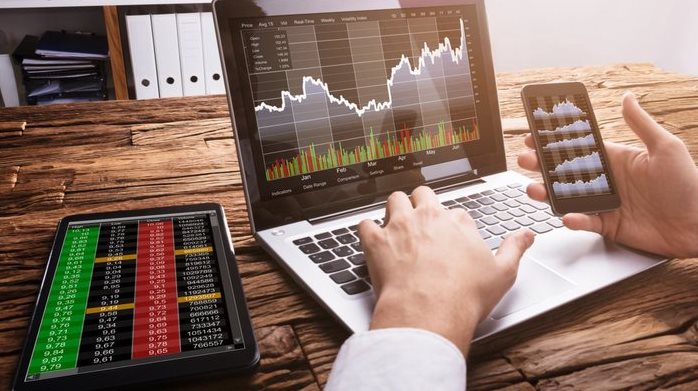
Online trading UK setup showing a laptop, tablet and smartphone with live stock market charts

Best Online Trading UK Brokers 2026

1

Plus500

Leading CFD Broker in the UK

4.8out of 5 rating

FCA regulated CFD trading

Min. Deposit
£50
Founded
2008
Platforms
Plus500 WebTrader, App
Regulation
FCA (FRN 509909)
Visit Plus500

Plus500 Authorised and Regulated by the FCA (FRN 509909) in the UK. 76% of retail CFD accounts lose money.

2

XM

Global Multi-Asset Broker

4.7out of 5 rating

Low spreads & fast execution

Min. Deposit
£5
Founded
2009
Platforms
MT4, MT5, XM App
Regulation
FCA, CySEC, ASIC
Visit XM
3

IQ Option

Best Platform for Beginners

4.5out of 5 rating

Free demo account to practice

Min. Deposit
£50
Founded
2013
Platforms
IQ Option App
Regulation
CySEC
Visit IQ Option
4

HYCM

Established Broker Since 1977

4.4out of 5 rating

Forex, shares and commodities

Min. Deposit
£20
Founded
1977
Platforms
MT4, MT5
Regulation
FCA, CySEC, DFSA
Visit HYCM
5

Exness

Trusted Low-Spread Broker

4.3out of 5 rating

Instant withdrawals & tight spreads

Min. Deposit
£50
Founded
2008
Platforms
MT4, MT5, Exness Terminal
Regulation
FCA, CySEC, FSCA
Visit Exness

Online Trading UK is becoming increasingly popular among United Kingdom residents. With the rise of technology, we have also witnessed the rise of online trading platforms in the UK. The aim of the Online Trading UK website is to provide people who are interested in trading online with the basic information they need to start online trading in 2026. Anyone with a computer and an internet connection can join the online trading market by creating an account with a broker. These brokers, or online trading sites, will help you build your portfolio. Please note that investing in stocks does not guarantee a return even if you are using the best online trading platform UK. Online trading is a risky business and you can lose your money.

In this comprehensive guide to online trading in the United Kingdom, you will learn what online trading is, how online trading works in the UK, how to buy and sell shares, how to choose the best online trading platform, and which FCA regulated forex brokers and trading apps are worth considering. Whether you are a complete beginner or an experienced investor, this page is your starting point for online trading UK.

What Is Online Trading?

Definition

Online Trading

Online trading is the process of buying and selling financial instruments such as shares, currencies (forex), commodities, indices and CFDs over the internet through a regulated online broker or trading platform, without the need for a traditional telephone or floor broker.

Online trading is buying and selling shares in companies listed on the London Stock Exchange (LSE), typically through the internet. Anyone with a smartphone or a computer with an internet connection can start online trading in the UK. An online trading platform acts as your online broker whereby it facilitates your purchase and sale of shares online. An online broker is a company or someone who is authorised to buy and sell stocks or other investments. If you want to buy shares or stocks, your broker will act as a middleman to place orders on your behalf.

Many UK brokers do not charge any commission to buy or sell stocks and other investments. Because an online trading platform acts as your broker, they may charge brokerage fees as a commission to purchase and sell stocks on your behalf through the exchange, or they may earn from the spread between the buy and sell price. Comparing these costs is one of the most important steps when choosing where to trade online.

Online Trading UK: Is It Legal and Regulated?

Online trading in the UK is legal, but you must make sure that you trade with a regulated and trusted provider. Online brokers in the UK are regulated by the Financial Conduct Authority (FCA). The FCA protects consumers, keeps the industry stable and promotes healthy competition between financial service providers. If you want to start trading online in the UK, you should research which markets you can trade in, come up with a trading strategy and open a live account to start trading online. Many UK online trading investors start off by opening a demo account where they practise and learn about the online trading market before risking real money.

A good rule of thumb is to always confirm a broker's FCA authorisation number before depositing any money. For example, Plus500 is Authorised and Regulated by the FCA (FRN 509909) in the UK. Trading with an FCA regulated broker means your money is held in segregated client accounts and you benefit from consumer protections such as negative balance protection for retail clients.

Trader analysing live forex and stock charts on a smartphone and tablet in the United Kingdom
Online trading in the United Kingdom can be done from anywhere using a phone, tablet or computer.

How Online Trading Works in the UK

Interested in trading online and wondering how online trading in the UK works? The process is more straightforward than most beginners expect. First, you need to find a broker, open an account, deposit money, select shares, order shares and buy shares. As a trader, you need a trading platform to make trades. The broker will take your request and execute the order. As a trader, you technically need to find a counterparty on the stock exchange, but the trading platform finds a counterparty for you automatically. The process is automatic and a deal can be made in just a few seconds.

The Basic Online Trading Process

  • Find and compare a regulated online broker
  • Open and verify your trading account
  • Deposit funds using a debit card, bank transfer or e-wallet
  • Research and select the shares or markets you want to trade
  • Place a buy or sell order through the platform
  • Monitor your positions and manage risk with stop-loss orders

Online Share Trading in the UK

Online share trading is one of the ways of generating extra income online in the UK. Many UK residents are now generating money by buying and selling shares online through the internet. Online share trading has proved to be one of the more risky online businesses, and more people are venturing into it every year. Before we go any further, it is important to define online share trading and explain how online share trading works in the UK. You need to think carefully before buying and selling shares. You should think about how much money you want to invest, how long you will hold shares and how much risk you are willing to take.

Definition

Online Share Trading

Online share trading is the buying and selling of shares in London Stock Exchange listed companies through the internet. It gives UK citizens the power to invest in the share market directly, so anyone with a smartphone or computer connected to the internet can trade shares online.

How Does Online Share Trading Work?

Online share trading works like this. While there are physical stock exchanges, shares are acquired and traded online. To trade shares in the United Kingdom, you need an online stockbroker who acts as an intermediary to the stock exchange. An online stockbroker is an online trading platform which allows you to execute trades by yourself.

When you buy a share in an organisation or a business, you become a shareholder and you own a small portion of that business. As a shareholder, you will receive a share of the organisation's profit as a dividend when the company performs well. If you own the right type of shares, you will also have the right to vote at company meetings. However, if the company does not perform well, your shares lose value and will not be worth as much, meaning you have lost some of the money you paid for those shares.

With over 2,600 companies from more than 60 countries listed on the London Stock Exchange, of which around 1,151 are on the Alternative Investment Market (AIM), there are plenty of investment options to choose from. Online trading of shares really does work for many UK residents who take the time to learn the fundamentals.

Close-up of a hand trading cryptocurrency and shares on a mobile online trading app
Online share trading apps let UK investors buy and sell shares in seconds.

How Do You Make Money From Shares?

You make money from shares in two main ways. The first is capital growth: buying when the price is low and selling when the price is high. The difference between your buy and sell price is your capital profit or loss. The second way to make money from stocks as a shareholder is through dividends. Dividends are usually paid twice a year, and you can reinvest them to compound your returns or bank them as income.

Successful long-term investors often combine both approaches, holding quality shares for years to benefit from rising prices and regular dividend payments. Short-term online traders, on the other hand, aim to profit from price volatility by buying and selling more frequently. Both approaches carry risk, and understanding the difference between trading and investing is key to building a strategy that suits your goals.

How to Buy Shares Online in the UK

The cheapest and easiest way to buy shares is online using what is called a share dealing platform. These online trading platforms let you buy shares from any company listed on the London Stock Exchange. If a company is listed on the stock exchange, you can basically buy its shares. Below are the six steps you need to follow when buying shares online.

1. Find a Stockbroker

To buy and sell shares online in the UK, you will need to find an online stockbroker and create an account. You can use a full-service broker or a self-directed share trading platform. When you use an online share trading platform, you place the trades yourself. There are plenty of the best online trading platforms UK available for United Kingdom investors, some offered by specialist brokers and others by major banks. You can even sign up with more than one platform to save money on fees.

2. Create an Account

You need to be at least 18 years old to create an online trading account in the UK and must be a UK resident. It is free to register an account with most brokers. As a new client, you will usually need to provide a government-issued photo ID, your name, address, date of birth and contact details, proof of address and your bank account details. The whole process can take a few minutes or up to two weeks to be approved, depending on the broker.

3. Plan Before You Buy Shares

Before you start trading online or buy shares, you must plan. Planning is one of the most important factors of any investing business. Ask yourself: How much money can I afford to lose in stocks? How much can I afford to invest? How will online trading benefit me? What will I do if prices rise, and what will I do if they fall? Answering these questions helps you build a trading strategy and understand the difference between trading and investing.

4. Choose the Shares You Want to Buy

Before you buy a share, research the company and how it makes profit. With a wide variety of sectors on the market, aim to build a diversified portfolio to avoid major losses. Through an online trading platform you can access market analysis, research, news and recommendations. Consider whether the company pays a dividend, whether its debt is under control and whether its profit is growing. A popular valuation tool is the Price-to-Earnings (P/E) Ratio, calculated as the market value per share divided by earnings per share.

5. Order Your Stocks

Once you have chosen your shares and how much to spend, it is time to order them. On a self-directed platform you enter the stock code or company name, the number of shares or amount to invest, select your order type, then preview and confirm the purchase.

6. Pay for Your Shares

The final step is to pay for your shares. If you have already funded your online trading account, the money is deducted automatically. You will then receive confirmation of your shareholder status together with your holder identification number, and it is time to monitor your investment.

Types of Stock Orders Explained

Understanding order types is a fundamental part of online trading. The three most common orders UK traders use are market orders, limit and stop orders, and trailing orders.

Definition

Market Order

A market order is an instruction to buy or sell a security immediately at the best available current price. It guarantees execution but not the exact price.

Definition

Limit and Stop Orders

A limit order promises a trade only at a particular price or better. A stop order is used to limit losses by selling a stock once it falls to a set price. Stop-limit orders combine both to control the exact price at which an order executes.

Definition

Trailing Stop Order

A trailing stop sets the stop price at a fixed amount below the market price. As the market price rises, the stop price rises with it, but if the price falls the stop stays put, helping you lock in gains while limiting downside.

How to Hold and Sell Shares

How to Hold Shares

There are two main ways to hold shares in the UK. With a certificated dealing service you trade shares yourself and hold paper certificates as proof of ownership. Alternatively, with a nominee service the investments are held electronically by a company on your behalf, which is how most online brokers operate today.

How to Sell Shares

Selling shares is just as easy as buying them. You can sell online through your trading platform or by contacting a full-service broker. You can sell your shares by their value or by number. When you sell, you exchange the legal title of ownership, and settlement can take up to two working days before the money is transferred into your bank account. Keep a copy of everything as proof.

How to Start Trading Stocks Online

There are several things you need to know before you start trading stocks online, whether you want to invest for the long term or trade frequently. Following the right process will help you invest more effectively. Here are the key steps: research about stocks, get an education or training, find an online stockbroker, create a demo account, open a live trading account, sign up for a stock trading platform, select the stocks you want to buy, choose your order type and finally buy the stock.

Education is especially important. There are online trading academies and courses that teach beginners how to trade stocks, and many online stock brokers offer free webinars and seminars. Some brokers also offer paper trading, a simulation that lets you practise without risking real money. Take advantage of these resources before you commit real capital. Read our full online trading for beginners guide to go deeper.

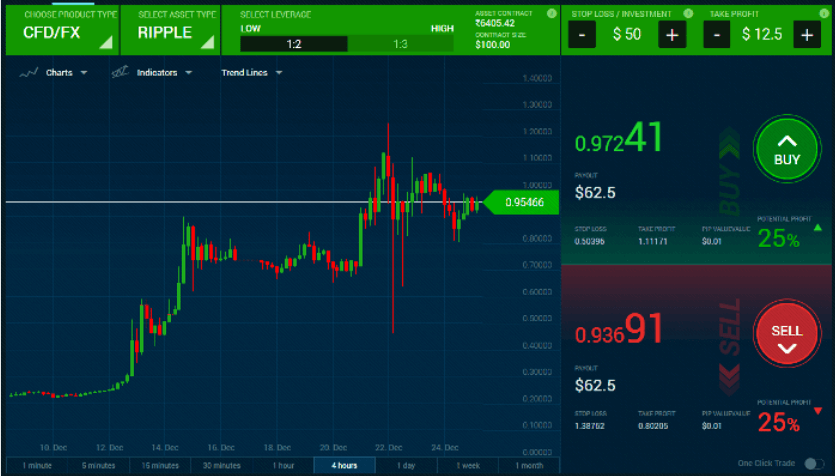
Online trading UK platform interface showing a CFD chart with buy and sell buttons
A typical online trading platform interface with charts, indicators and one-click buy and sell orders.

Best Online Trading Platforms UK 2026

With the rise of the best online trading platforms UK, you can now find a platform that suits your trading needs as you buy shares online through a computer or smartphone. Popular options among UK traders include Plus500, XM, IQ Option, HYCM and Exness, all featured in our comparison above. Other well-known names in the UK market include eToro, IG, AvaTrade, interactive investor, Saxo Markets and Capital.com. Each platform has its own strengths, whether that is low fees, beginner-friendly design, advanced charting or a wide range of markets.

For an in-depth breakdown, read our dedicated guide to the best trading platforms UK and our overview of online trading platforms.

Choosing the Best Online Trading Platform in the UK

It is not easy to choose the best online trading platform in the United Kingdom because there are dozens of share trading platforms in Britain. Whether you are a beginner or a seasoned online trader, our experts recommend comparing platforms against the following key features.

  • Security: how safe is the platform and is your money protected?
  • Fees: compare brokerage fees and spreads charged per trade
  • Education: does it offer courses, tutorials and research tools?
  • Customer support: is help available by email, phone or live chat 24/7?
  • Trade options: are market, limit and stop-loss orders available?
  • Ease of use: is the platform quick and simple to navigate?
  • Range of assets: can you trade forex, CFDs, indices and shares?
  • Market data and research: real-time quotes, news and analysis

Advantages and Disadvantages of Online Trading

While online trading comes with many benefits, it also carries risk. Regardless of how you trade, there is always the possibility of losing money. Here is an honest look at both sides.

Advantages of Online Trading

  • Access your accounts online 24/7
  • Easy to open and manage your account
  • Potential to grow wealth if used carefully and smartly
  • Ability to avoid brokerage bias
  • Lower fees than traditional brokers
  • More control and flexibility over your trades
  • Monitoring tools and alerts for convenience
  • Access to free online trading academies and education

Disadvantages of Online Trading

  • Online trading is a very risky business
  • Losses can occur due to platform or technical failures
  • A slow internet connection can be problematic
  • No personal relationship with an online broker
  • Risk is much higher for inexperienced beginners
  • The temptation to overtrade can hurt returns

Online Trading Terms and Definitions

New to trading online? These quick definitions of common online trading terms will help you understand the markets and trade with more confidence.

Definition

Broker

A broker is a regulated company or individual authorised to buy and sell financial instruments on your behalf through an exchange, usually via an online trading platform.

Definition

CFD (Contract for Difference)

A CFD is a leveraged financial product that lets you speculate on the rising or falling price of an asset without owning it. CFDs are complex and 76% of retail CFD accounts lose money.

Definition

Spread

The spread is the difference between the buy (ask) price and the sell (bid) price of an asset. It is one of the main ways brokers make money.

Definition

Leverage

Leverage is effectively a loan from your broker that lets you open a larger position than your deposit. It magnifies both profits and losses.

Definition

Demo Account

A demo (practice) account is funded with virtual money so beginners can experiment with a trading platform and its features without risking real capital.

Online Trading vs Investing: What Is the Difference?

One of the most common points of confusion for people getting started with online trading UK is the difference between trading and investing. Although the two terms are often used interchangeably, they describe very different approaches to the financial markets. Understanding this distinction early will help you choose the right online trading platform, the right account type and the right strategy for your goals.

Investing is a long-term approach. An investor buys shares, funds or exchange-traded funds (ETFs) and holds them for years, aiming to benefit from steady capital growth and reinvested dividends. Investing usually means less frequent activity, lower costs and a focus on the underlying quality of a company. Many UK investors build a diversified portfolio inside a tax-efficient wrapper such as a Stocks and Shares ISA or a Self-Invested Personal Pension (SIPP).

Trading, by contrast, is a shorter-term activity. An online trader buys and sells financial instruments such as forex, CFDs, shares and commodities more frequently, aiming to profit from short-term price movements and market volatility. Trading online in the UK typically involves leverage, tighter risk management and a much more active day-to-day routine. It can be more rewarding for skilled traders, but it is also far riskier, which is why most retail CFD accounts lose money.

Definition

Investing

Investing is the act of committing money to financial assets such as shares, funds or ETFs over the long term, with the expectation of capital growth and income through dividends. Investors generally ride out short-term volatility in pursuit of long-term returns.

What Can You Trade Online in the UK?

Modern online trading platforms in the United Kingdom give retail traders access to a huge range of global markets from a single account. Below are the main asset classes you can trade online in the UK in 2026, along with a short definition of each so beginners understand exactly what they are buying and selling.

Shares and Stocks

Shares (also called stocks or equities) represent part-ownership of a company. When you trade shares online you can buy into companies listed on the London Stock Exchange, the FTSE 100 and FTSE 250, as well as international markets such as the New York Stock Exchange and NASDAQ. Share trading is popular with both long-term investors and active traders in the UK.

Forex (Foreign Exchange)

Forex trading is the buying and selling of currency pairs such as GBP/USD, EUR/GBP and USD/JPY. The forex market is the largest and most liquid financial market in the world, trading over $7 trillion per day. Forex is traded 24 hours a day, five days a week, which makes it especially popular among UK traders who want flexibility. Learn more in our full forex trading UK guide.

CFDs (Contracts for Difference)

A CFD lets you speculate on whether the price of an asset will rise or fall without owning the underlying instrument. CFDs are leveraged, meaning you can control a large position with a relatively small deposit. This magnifies both profits and losses, and it is why CFDs are considered complex, high-risk products by the FCA.

Indices

An index tracks the performance of a group of shares, such as the FTSE 100 (the 100 largest companies on the London Stock Exchange), the S&P 500 or the Dow Jones. Trading indices online lets you take a view on an entire market or economy rather than a single company.

Commodities

Commodities include gold, silver, oil, natural gas and agricultural products. Many UK traders use commodities such as gold as a hedge against inflation or market uncertainty. Commodities can be traded online as CFDs or through ETFs.

Cryptocurrencies

Some online trading platforms allow UK traders to trade cryptocurrencies such as Bitcoin and Ethereum, usually as CFDs. Crypto is extremely volatile and the FCA has strict rules around how crypto products can be marketed to UK retail consumers, so always check the risk warnings before trading.

ETFs and Funds

Exchange-traded funds (ETFs) bundle together many shares or assets into a single tradeable instrument, giving instant diversification. ETFs are popular with UK investors who want low-cost exposure to a whole index, sector or theme without buying every share individually.

Understanding Online Trading Costs and Fees in the UK

Costs have a direct impact on your returns, so understanding the fees charged by online trading platforms in the UK is essential before you deposit any money. Two traders using different brokers can achieve very different net results simply because of the fees they pay. Here are the most important costs to compare when choosing the best online trading platform UK.

  • Spreads: the gap between the buy and sell price on each trade
  • Commissions: a fixed or percentage fee charged per share trade
  • Overnight/swap fees: charged for holding leveraged positions overnight
  • Deposit and withdrawal fees: costs to move money in and out
  • Inactivity fees: charged if you do not trade for a set period
  • Currency conversion fees: charged when trading in foreign currencies
  • Platform or subscription fees: monthly charges on some platforms
  • Custody or account fees: ongoing charges for holding investments

Many of the best online trading UK brokers, including those in our comparison table, offer zero-commission share trading and earn instead from the spread. However, low headline costs do not always mean the best overall value. A platform with slightly higher fees but superior research tools, education and customer support can be a better choice, especially for beginners. Always read the full fee schedule and check for hidden charges before you commit.

Popular Online Trading Strategies for UK Traders

A trading strategy is a set of rules that tells you when to enter and exit the market. Having a clear, tested strategy is one of the biggest differences between successful online traders and those who lose money. Below are the most popular online trading strategies used by UK traders in 2026.

Day Trading

Day traders open and close all of their positions within the same trading day, avoiding the risk of holding overnight. Day trading requires time, discipline and fast decision-making, and it is best suited to experienced traders who can dedicate several hours a day to the markets.

Swing Trading

Swing traders hold positions for several days or weeks, aiming to capture larger price swings. This strategy suits UK traders who cannot watch the markets all day and prefer to analyse charts in the evening. Swing trading relies heavily on technical analysis and trend identification.

Scalping

Scalping is an ultra-short-term strategy where traders make dozens or even hundreds of small trades a day, each aiming for a tiny profit. Scalping demands tight spreads, fast execution and intense concentration, so it is generally not recommended for beginners.

Position Trading

Position trading is the longest-term trading style, with trades held for weeks, months or even years. Position traders focus on major trends and fundamental factors rather than short-term noise, blurring the line between trading and investing.

Technical vs Fundamental Analysis

To trade online successfully in the UK, you need a way to analyse the markets and make informed decisions. There are two main schools of analysis, and most experienced traders use a blend of both.

Definition

Technical Analysis

Technical analysis is the study of price charts, patterns and indicators such as moving averages, RSI and MACD to predict future price movements. It assumes that all known information is already reflected in the price.

Definition

Fundamental Analysis

Fundamental analysis evaluates the underlying value of an asset by studying financial statements, economic data, interest rates, company earnings and news events. It is used to decide whether an asset is overvalued or undervalued.

For share traders, fundamental analysis of a company's balance sheet, earnings and growth prospects is essential. For forex and short-term CFD traders, technical analysis tends to play a larger role because currency prices react quickly to charts, momentum and market sentiment. Combining both approaches gives you the fullest possible picture of the market before you place a trade.

Risk Management for Online Trading

Risk management is arguably the single most important skill in online trading. Even the best trading strategy will fail without proper risk control, because a handful of large losses can wipe out many small gains. Professional traders focus as much on protecting their capital as on making profits. Here are the core risk management principles every UK online trader should follow.

  • Never risk more than 1-2% of your account on a single trade
  • Always use a stop-loss order to cap potential losses
  • Set a take-profit target to lock in gains
  • Diversify across different assets and markets
  • Avoid over-leveraging your positions
  • Keep a trading journal to review your decisions
  • Never trade with money you cannot afford to lose
  • Control your emotions and stick to your plan

Most FCA regulated brokers offer built-in risk management tools such as stop-loss orders, guaranteed stop-loss orders, take-profit orders and negative balance protection. Negative balance protection is a legal requirement for UK retail clients, meaning you can never lose more than the money in your account. Use these tools on every trade you place.

Trading Psychology: Mastering Your Emotions

Many beginners underestimate just how much psychology affects online trading results. Fear and greed are the two emotions that destroy more trading accounts than any market crash. Fear can cause you to close winning trades too early or avoid good opportunities, while greed can push you to over-trade, chase losses or hold losing positions for too long in the hope they will recover.

The most successful online traders in the UK treat trading like a business, not a game. They follow a written trading plan, accept that losses are a normal cost of doing business, and never let a single trade affect their emotional state. Practising on a demo account, starting with small position sizes and keeping a detailed trading journal are all proven ways to build the discipline and patience that consistent trading requires.

UK Trading Hours and the Best Times to Trade

Knowing when the markets are open helps you plan your online trading around your lifestyle. The London Stock Exchange is open from 8:00am to 4:30pm UK time, Monday to Friday. This is when UK shares are most actively traded and spreads are typically at their tightest.

The forex market runs 24 hours a day from Sunday evening to Friday evening, split into the Sydney, Tokyo, London and New York sessions. For UK forex traders, the most active and liquid period is the London session, especially the overlap with the New York session in the early afternoon UK time, when trading volume and volatility peak. Timing your trades around these high-liquidity windows can mean tighter spreads and better execution.

Tax on Online Trading in the UK

Understanding how online trading is taxed in the United Kingdom is an important part of trading responsibly. The tax you pay depends on how you trade and which products you use. This section is a general guide only and does not constitute tax or financial advice, so always check the latest HMRC rules or speak to a qualified accountant.

Capital Gains Tax (CGT)

When you make a profit from selling shares or other investments, you may be liable for Capital Gains Tax on gains above your annual allowance. Losses can often be offset against gains to reduce your bill. Keeping accurate records of every trade is essential for calculating what you owe.

Income Tax and Dividends

Dividends you receive from shares may be subject to Dividend Tax above the annual dividend allowance. If HMRC considers your trading to be a business or your main source of income, profits could be treated as income and taxed accordingly.

Spread Betting

In the UK, profits from spread betting are currently free from Capital Gains Tax and stamp duty for most retail traders because it is classed as gambling rather than investing. This is one reason spread betting remains popular with UK traders, though it is still a high-risk leveraged product.

Tax-Efficient Accounts: ISAs and SIPPs

UK investors can shelter gains and income from tax by trading inside a Stocks and Shares ISA (with an annual subscription allowance) or a Self-Invested Personal Pension (SIPP). These wrappers are ideal for longer-term investing rather than active CFD or forex trading.

Common Online Trading Mistakes to Avoid

Most beginners lose money not because trading is impossible, but because they make the same avoidable mistakes. Learning to recognise these pitfalls in advance will give you a significant head start on your online trading journey in the UK.

  • Trading without a plan or strategy
  • Risking too much capital on a single position
  • Not using stop-loss orders to limit losses
  • Over-leveraging and misunderstanding margin
  • Chasing losses and revenge trading
  • Letting emotions drive decisions
  • Ignoring trading costs and spreads
  • Failing to research or practise on a demo first

The good news is that every one of these mistakes is preventable. By starting on a demo account, keeping your position sizes small, using risk management tools and continuing to learn, you can avoid the errors that catch out most new traders. Our beginner's guide to online trading walks through each of these in more detail.

How to Choose the Best Online Broker in the UK

Choosing the right online broker is one of the most important decisions you will make as a trader. The best online trading UK broker for you depends on your experience, your budget, the markets you want to trade and the features you value most. Beyond the headline comparison in our table above, here is what to look for when selecting a broker in 2026.

First and foremost, always confirm that the broker is authorised and regulated by the Financial Conduct Authority (FCA). FCA regulation means your funds are held in segregated client accounts, you benefit from negative balance protection, and you have access to the Financial Ombudsman Service and, in some cases, the Financial Services Compensation Scheme (FSCS) if the broker fails. Never deposit money with an unregulated or offshore broker that is not authorised to serve UK clients.

Next, consider the trading platform itself. Is it available on desktop, web and mobile? Does it offer the charting tools, indicators and order types you need? Popular professional platforms such as MetaTrader 4 (MT4) and MetaTrader 5 (MT5) are offered by many brokers, while others provide their own proprietary platforms. Read our trading platform reviews and trading app comparison to see which suits you best.

Getting Started With Online Trading UK in 2026

If you have read this far, you now understand what online trading is, how it works in the United Kingdom, the markets you can trade, the strategies you can use and the risks involved. The final step is to put that knowledge into practice safely. In 2026, getting started with online trading UK has never been easier, but it still pays to take it slowly and build your confidence before committing significant capital.

Begin by comparing the FCA regulated brokers in our table and choosing one that matches your experience level and the markets you want to trade. Open a free demo account and spend a few weeks practising with virtual money until you are comfortable placing, managing and closing trades. Learn to use stop-loss and take-profit orders, and get familiar with the platform's charting and research tools.

When you are ready to trade with real money, start with a small deposit and small position sizes. Never risk more than you can afford to lose, keep a trading journal, and continue learning through the broker's free education, webinars and market analysis. Whether you want to trade forex, shares, CFDs, indices or commodities, a disciplined and patient approach gives you the best possible chance of long-term success as an online trader in the UK.

Remember that trading online is a marathon, not a sprint. The traders who last are the ones who protect their capital, manage risk carefully and treat every trade as a learning opportunity. Use the guides across this website, including our beginner guide, forex broker comparison and platform overview, to keep building your knowledge.

Online Trading UK FAQs

Is online trading legal in the UK?

Yes, online trading in the UK is completely legal. UK brokers are regulated by the Financial Conduct Authority (FCA), which protects consumers, keeps the industry stable and promotes healthy competition between financial service providers.

Can I make money from trading online in the UK?

Yes, you can make money trading shares, forex or CFDs online in the UK, but trading is risky and you can also lose money. Most retail CFD accounts lose money, so only invest what you can afford to lose and consider practising on a demo account first.

Do I pay tax on online trading in the UK?

Yes, you are generally liable to tax on online trading profits in the UK, such as Capital Gains Tax, unless you are an amateur speculator trading via spread betting. Always check the latest HMRC rules or speak to a tax adviser.

Can I trade international shares from the UK?

Yes, many online trading platforms let you trade international shares. You can buy shares listed on exchanges such as the New York Stock Exchange, NASDAQ, the Johannesburg Stock Exchange (JSE) and the Australian Securities Exchange (ASX).

How can I become a better trader?

To become a successful online trader you need to research stocks and markets, learn about online trading in the UK, develop a trading strategy, practise on a demo account, use risk management tools such as stop-loss orders and stay patient.

What is the best online trading platform in the UK for 2026?

The best online trading platform depends on your goals. For CFDs, Plus500 is a leading FCA regulated choice, while XM and Exness are popular for forex, IQ Option suits beginners, and HYCM is a long-established multi-asset broker. Compare our top brokers above to find the right fit.

How much money do I need to start online trading in the UK?

You can start online trading in the UK with a relatively small amount. Several of our recommended brokers accept minimum deposits of around £50, and some let you open an account with even less. However, we always recommend starting small, practising on a demo account first, and only trading with money you can afford to lose.

Is my money safe with a UK online trading platform?

If you trade with an FCA regulated broker, your money is held in segregated client accounts separate from the company's own funds, and retail clients benefit from negative balance protection. Some brokers are also covered by the Financial Services Compensation Scheme (FSCS). Always verify a broker's FCA authorisation before depositing.

What is the difference between a demo account and a live account?

A demo account is funded with virtual money so you can practise trading and test a platform risk-free, while a live account uses your real money and produces real profits and losses. Beginners should always start on a demo account to learn the platform before switching to live trading.

Can I trade online in the UK on my mobile phone?

Yes. Almost every leading UK broker offers a mobile trading app for iOS and Android, letting you open and close trades, fund your account, set price alerts and monitor the markets from anywhere. See our online trading apps guide for the best mobile platforms.

Conclusion

Online trading in the UK has grown enormously over recent years, and with the rise of the internet and smartphones the number of retail traders continues to climb into 2026. More and more UK residents are investing in shares, forex and CFDs through FCA regulated online brokers and platforms.

To get started safely, choose a regulated broker, practise on a demo account, learn the fundamentals, use risk management tools and never invest more than you can afford to lose. Use our comparison of the best online trading UK brokers above, then explore our beginner guide, platform reviews and forex trading resources to build your knowledge before you place your first trade.